
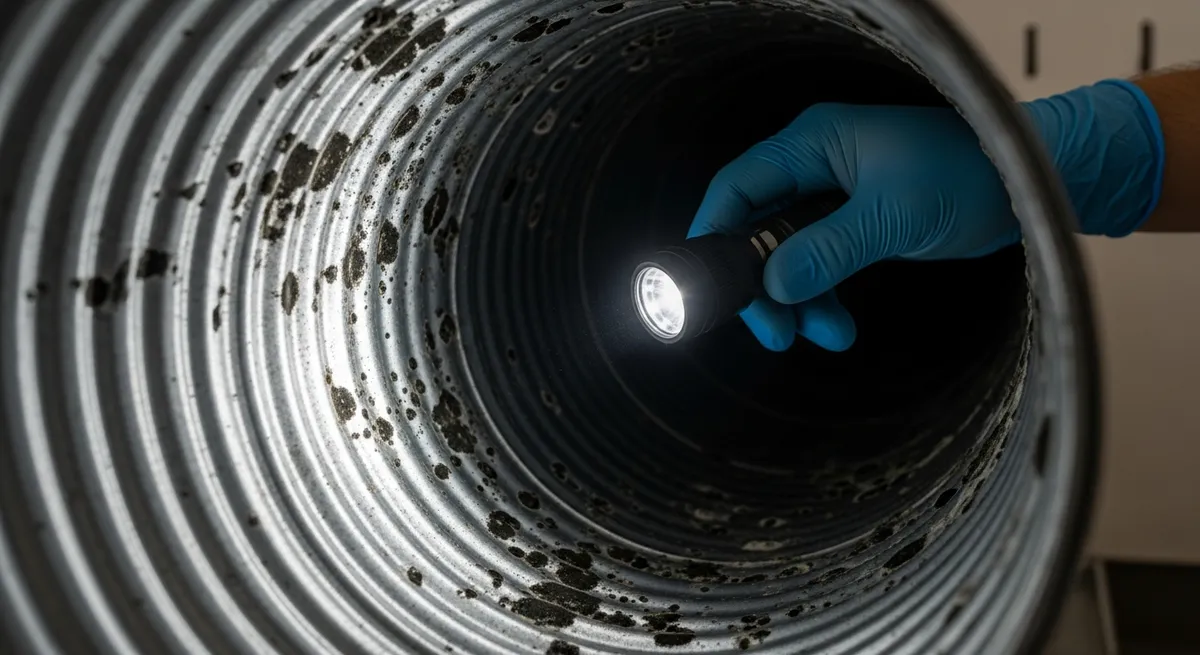
A dark mark, dust, or musty odor does not by itself confirm mold in ductwork. EPA notes that a substance can look like mold without being mold; a qualified expert may need to assess it. Do not rely on appearance alone or pay for a treatment before the suspected growth and its source are evaluated.
What to look for
Document the location, visible moisture, leaks, and whether the material is on a hard-surface duct or on insulated duct material. EPA says substantial visible mold growth inside hard-surface ducts or HVAC components may warrant cleaning. If insulated ducts are wet or moldy, EPA says they cannot be effectively cleaned and should be removed and replaced.
Correct moisture before cleanup
Moisture control is central: repair the leak or condensation source and dry affected materials. CDC explains that damp and moldy environments may cause health effects for some people, while others may have no symptoms. A smell alone cannot establish what is present or diagnose a health problem.
If you are concerned about a Virginia Beach, Norfolk, or Chesapeake home, start with a documented assessment. Do not apply a sanitizer or biocide as a substitute for removing contamination and correcting the moisture condition.
See the EPA's mold and duct guidance and the CDC's mold information.