
Anyone who has spent a July afternoon in the 757 knows the feeling: you step outside in Norfolk or Hampton and the air is so thick you can practically drink it. Hampton Roads sits at the meeting point of the Chesapeake Bay, the Atlantic Ocean, and a web of tidal rivers, which keeps our summer humidity parked between 70% and 90% for months at a time.
Your air conditioner fights that moisture all day long — and the battleground is your ductwork. Understanding how humidity turns into duct mold is the first step to protecting your family's air, whether you live in a Ghent walk-up, a Phoebus foursquare, or a newer build out in any of the ten cities we serve across Hampton Roads.
Why Humid Air and Ductwork Are a Dangerous Combination
Mold needs three things to grow: spores, a food source, and moisture. In a coastal Virginia home, your ducts can supply all three.
- Spores are always present in outdoor air — they ride in every time a door opens and get pulled into your return vents.
- Food is the layer of dust, skin cells, pet dander, and pollen that settles inside every duct over time.
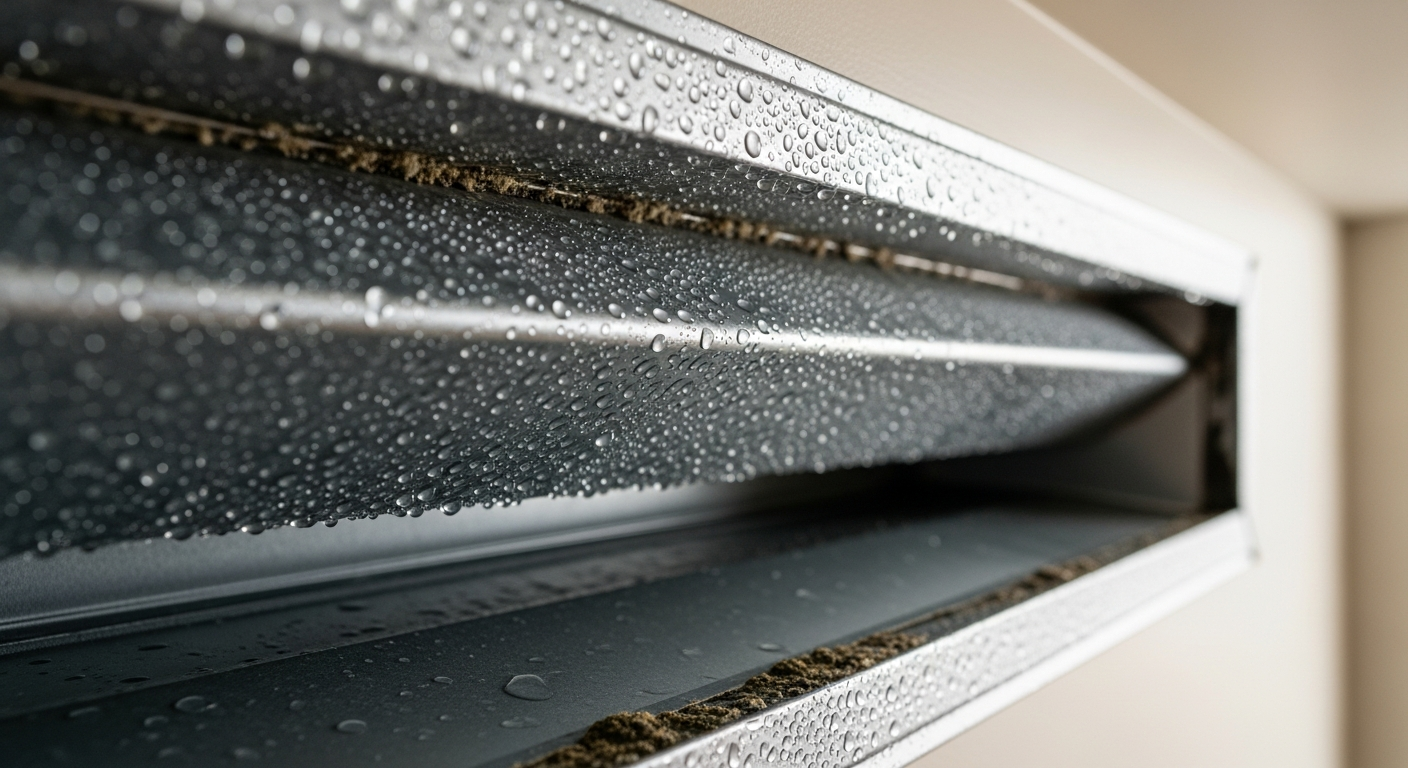
- Moisture is the Hampton Roads special. When warm, muggy air meets duct surfaces chilled by your air conditioning, water condenses inside the system — exactly like the sweat on a glass of iced tea.
Once condensation forms on that dust layer, mold colonies can establish themselves in as little as 24 to 48 hours. And because the ducts push air into every room, spores don't stay put — they circulate through your whole house every time the system runs.
The Hampton Roads Risk Factors
Some regional quirks make homes from Portsmouth to Newport News especially vulnerable:
- Ducts in vented crawl spaces. Thousands of homes across Norfolk, Portsmouth, and Hampton run ductwork through humid crawl spaces that hover near 100% relative humidity in summer. Any small leak or missing insulation wrap turns those runs into condensation machines — our sweating duct repair and sealing service stops that cycle at the source.
- Ducts in blazing attics. Attic-run ducts see huge temperature swings that drive condensation cycles at the boots and registers.
- Salt-air corrosion. Coastal air slowly degrades duct seams and mastic, opening gaps that pull in unconditioned, moisture-heavy air.
- Storm and flood moisture. After nor'easters and tropical systems, elevated indoor humidity can linger for weeks in low-lying neighborhoods.
Warning Signs Your Ducts May Already Have Mold
Watch for a musty, earthy odor that gets stronger when the AC kicks on; visible dark speckling around vent registers; allergy symptoms that improve when you leave the house; and unexplained condensation around supply vents. If any of these sound familiar, a free photo duct inspection will show you exactly what's happening inside the system — no guesswork, no pressure.
How to Break the Humidity–Mold Cycle
1. Clean the food source out of the ducts. Professional air duct cleaning removes the dust and debris layer mold feeds on, and an EPA-registered sanitizing treatment neutralizes spores left behind. For visible growth, our mold duct fogging and sanitization service removes the colony and fogs the full system.
2. Fix the moisture at its source. If your ducts run through a damp crawl space, cleaning alone is a bandage. Sealing and insulating the space stops the condensation cycle — our sister company Universal Insulation Doctor in Hampton handles crawl space encapsulation and insulation across the region.
3. Watch for moisture-loving pests. The same damp conditions that grow mold also attract cockroaches, camel crickets, and rodents that nest in and around ductwork. If you're seeing both moisture and pest activity, Universal Pest & Termite in Norfolk can treat the infestation while we handle the ducts.
4. Manage indoor humidity. Keep indoor relative humidity below 60% (ideally 30–50%), run bathroom and kitchen exhaust fans, and replace filters on schedule.
One Region, One Local Team
We've been cleaning ducts in this climate for more than 26 years, from the Oceanfront to Williamsburg. If coastal wind-blown sand is your bigger concern, read our companion guide on how Virginia Beach coastal winds fill ducts with sand and allergens, or see what spring pollen does to Chesapeake HVAC systems. Ready for answers about your own home? Start with a free photo inspection anywhere in Hampton Roads.
Serving Hampton Roads — the Total Home Health Way
Universal Duct Cleaning is a local company, and our technicians are in Hampton Roads neighborhoods like Downtown Hampton, Fort Eustis, and Sleepy Hole every week. If you live nearby, visit your neighborhood page to see recent jobs, local reviews, and service details for your area.