

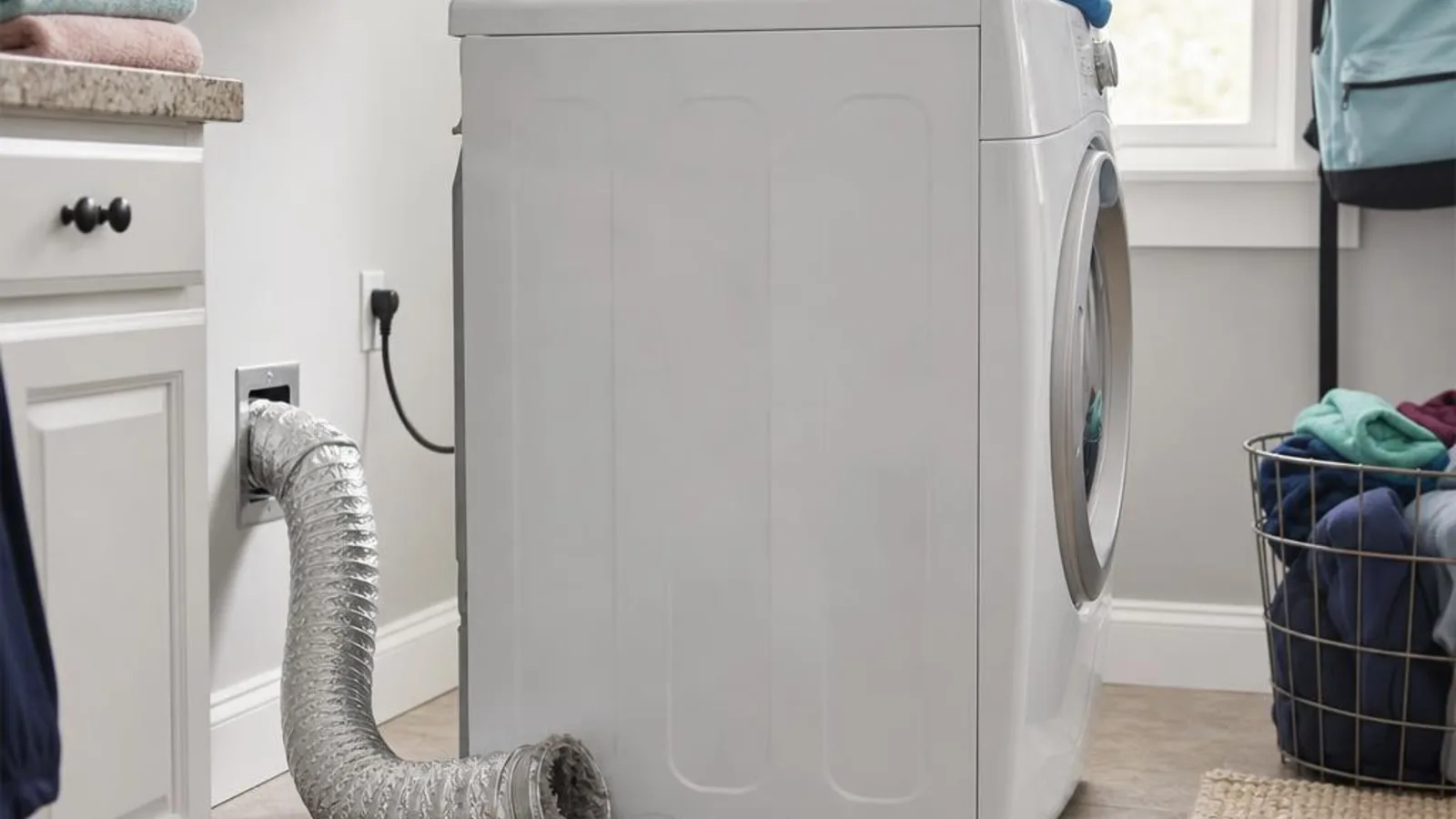
The weeks around back-to-school are some of the heaviest laundry days of the year in Newport News households — sports uniforms, new school clothes going through their first wash, bedding, and backpacks. That surge in dryer use is exactly when a partially blocked dryer vent goes from a minor inconvenience to a real problem. This guide covers the specific warning signs to watch for, explains why long or turning vent runs are more vulnerable than short straight ones, and tells you plainly when it makes sense to stop using the dryer and call for service.
Why Newport News Homes Are Prone to Vent Buildup
Newport News housing stock spans small bungalows in the South End to newer townhomes in Kiln Creek and large colonials in Denbigh. Two common layout characteristics make dryer vent problems more likely here than in homes with simple, short runs:
- Long vent runs through interior walls. Homes where the laundry room sits in the middle of the house — common in Denbigh-era colonials and ranch additions — may have eight to fifteen feet or more of duct before reaching an exterior wall. Every additional foot of run reduces exhaust velocity, which means more lint drops out of the airstream and sticks to the duct wall.
- Multiple elbows. Each 90-degree elbow is roughly equivalent to adding several feet of straight run in terms of airflow resistance. A vent with two or three elbows — not uncommon in finished-basement or second-floor laundry installations — can accumulate lint far faster than a single straight run suggests.
- Older flex duct. Flexible metal vent hose has corrugated ridges that catch lint with every load. Homes that have never had their vent updated from flexible to rigid smooth-wall duct clean significantly harder and block significantly faster.
Warning Signs Your Dryer Vent Needs Attention
None of these signs alone constitutes a certain diagnosis — a slow dryer can have causes unrelated to the vent, including appliance age, drum seal wear, or a tripped thermal fuse. But any of the following is a reasonable prompt to have the vent inspected before you rely on the machine through a heavy-use season:
- Clothes take significantly longer than one cycle to dry. If a load of towels that used to finish in 45 minutes now needs 70–80 minutes, reduced exhaust airflow is the most common culprit.
- The dryer cabinet or laundry room feels noticeably hot during a cycle. A blocked or partially blocked vent forces exhaust heat back into the machine and the surrounding space instead of out through the exterior cap.
- Damp lint in or around the lint screen housing. Lint should be dry when you pull the screen. Wet or compressed lint means exhaust moisture is not escaping properly — it is condensing inside the vent run and soaking back into the dryer.
- A musty or burning smell during operation. Musty odors often indicate damp lint sitting in the vent between uses. A burning smell is more urgent and warrants stopping the dryer immediately and calling for service rather than trying another load first.
- The exterior vent cap is not opening during operation. Most exterior caps have a damper or flap that opens when the dryer runs and closes when it stops. If the damper is not moving or is visibly caked with lint from outside, the vent is obstructed at or near the cap.
- More than 12 months since the last cleaning. Annual dryer vent cleaning is the standard recommendation regardless of visible symptoms, because lint accumulates before it causes noticeable performance changes.
When to Stop Using the Dryer and Call for Service
The clearest signal to pause use and call for service rather than finishing a load is a burning smell. Lint is combustible, and a burning odor during operation indicates enough heat is building up in the vent that the lint is getting hot enough to produce that smell. That situation warrants stopping immediately, not completing a cycle and then calling.
A dryer that simply runs slow or takes extra time is not necessarily a stop-use emergency — but it is a reason to schedule a cleaning promptly rather than putting it off. Operating a dryer with a significantly restricted vent causes the appliance to work harder, run hotter, and cycle its thermal safety mechanisms more frequently, which shortens appliance life over time. We are not suggesting every slow dryer is dangerous, but continuing to use a visibly underperforming machine through a heavy-use season without addressing the cause adds unnecessary wear.
What a Professional Rotary Sweep to the Exterior Cap Involves
A proper dryer vent cleaning is not a shop-vac pass at the back of the dryer. Here is what the full rotary sweep process covers:
- Full run inspection. We check the vent path from the dryer connection to the exterior cap, noting the number of elbows, total run length, and whether flexible or rigid duct is in use.
- Rotary brush agitation through the full length. A flexible rotary brush spins through the entire duct run, dislodging compacted lint from the duct walls and elbows throughout — not just near the dryer or just at the cap end.
- Vacuum extraction at the dryer end. Dislodged lint is captured at the connection point rather than blown through the exterior cap into the siding or gutter area.
- Exterior cap check and cleaning. The exterior cap damper is inspected, cleaned of any exterior lint or debris, and confirmed to open and close freely. Damaged or bird-nested caps are noted — a stuck-open cap lets cold air back-draft in winter and is an entry point for pests.
- Airflow confirmation. We confirm airflow is restored at the exterior before we leave, so you know the full run is clear — not just the section we could see.
Keep Up with Back-to-School Season and Beyond
Dryer vent cleaning fits easily into a routine home maintenance plan. Our Total Home Health Subscription covers it as part of a one yearly fee plan with tiered benefits — including duct cleaning, dryer vent cleaning, an annual multi-point duct and crawl space inspection, and more (the full set of benefits is included in the Elite tier). No contracts, and you can cancel anytime. For pest control — including the birds and rodents that occasionally nest at exterior vent caps — our sister company Universal Pest in Newport News handles exclusion and removal so the cap stays clear between cleanings.
Call us at (757) 962-0419 or schedule your dryer vent cleaning online. We serve all of Newport News — from Kiln Creek and Denbigh to the South End — and most appointments are available within a few days before back-to-school season peaks.

