
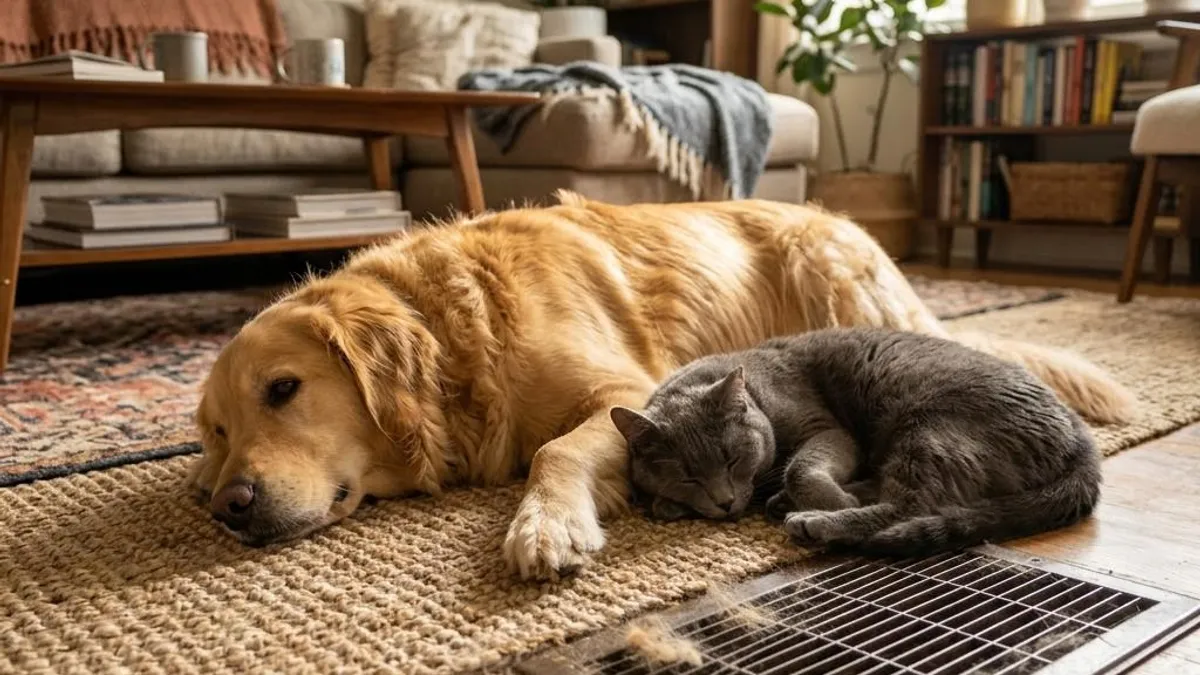
Here's the part most pet owners never think about: dander isn't hair. It's microscopic flakes of skin — light enough to stay airborne for hours, small enough to slip past cheap filters, and sticky enough (thanks to the proteins that actually cause allergies) to cling to the inside of your ductwork. Every time your system runs, it pulls dander-loaded air through the returns, coats the duct walls with a little more of it, and blows a portion back out of every supply register in the house.
That's why a home can look spotless and still make an allergic guest sneeze within minutes: the reservoir isn't on the furniture. It's in the ducts.
How Dander Builds Up in a Duct System
- Returns are the intake. Whatever floats near a return grille gets inhaled by the system — and in a pet home, that's a steady stream of dander, fur, and dust bound together.
- Duct walls are the filter nobody changes. Dander's sticky proteins bond to dust and any moisture film inside the runs. In our humid Hampton Roads climate, ducts over vented crawl spaces sweat just enough to turn that layer into a coating.
- Supply registers are the sprayer. Each cooling or heating cycle re-launches a fraction of that stored dander into bedrooms — including rooms your pet never enters.
- Fur chokes airflow too. Beyond allergies, fur mats on the evaporator coil and inside returns, making the system work harder and run longer — which circulates even more dander.
Signs Your Ducts Are Holding a Dander Reservoir
Allergy symptoms that flare when the system kicks on. A guest who reacts in rooms the pet doesn't use. Fur tufts visible on return grilles or inside floor registers. Gray fuzz on supply vent louvers within days of dusting them. And the classic: symptoms that don't improve after a deep clean of the carpets and furniture, because the reservoir upstairs from the vents was never touched.
What Actually Works (and What Doesn't)
Sprays, scented filters, and duct “deodorizers” mask the smell without removing the proteins. What works is mechanical removal: rotary brushes agitating the duct walls while a direct-contact HEPA vacuum captures what comes loose — every supply, every return, photographed before and after so you see the dander layer gone rather than perfumed. For households with severe allergies, an optional antimicrobial sanitizing fog and a better filtration setup finish the job. A qualifying single-zone cleaning starts at $312, and the photo inspection that comes first is free — if your ducts turn out to be clean, you'll know without spending a dollar.
Keeping It From Coming Back
- Upgrade and change filters on time. A pleated filter rated for pet dander, changed on schedule, catches most of what your pets shed before it reaches the ducts.
- Vacuum return grilles weekly — they're the system's nostrils.
- Groom pets regularly, ideally outdoors or in a room without a return.
- Get eyes inside the ducts yearly. Multi-pet homes are one of the few household types where an annual look genuinely pays off — see our guide on whether ducts need cleaning every year.
The Whole-Home Answer for Pet Households
Pet families from Kempsville to Greenbrier tend to love our Total Home Health Subscription for exactly this reason: one yearly fee, with tiers that can bundle duct cleaning, dryer vent cleaning (pet fur loads dryer vents fast, too), pest control, and an annual multi-point duct, attic, and crawl space inspection — the full set comes with the Elite plan. And because dander isn't the only thing that ends up in ductwork, our sister companies cover the rest of the house: Universal Pest & Termite keeps rodents and insects from adding their own contamination to your crawl space and ducts, and Universal Insulation Doctor keeps the insulation around your ductwork dry and sealed so humidity can't turn dander buildup into something worse.
If the vents in your home have never been photographed from the inside, that's the place to start: schedule your free photo duct inspection and see what your pets have been sending through the system.
