
That first cool morning near Great Neck, along Shore Drive, or in Virginia Beach’s North End can be the first time the furnace has run in months. If the house suddenly smells like something is burning, pause before calling it “just dust” — and before assuming the air ducts are the cause.
An odor is a clue, not a diagnosis. A brief dusty smell at first startup can happen after heating equipment has been idle, but some smells signal a gas, electrical, or fire-safety problem. This guide helps Hampton Roads homeowners choose a safe next step without guessing.
First: separate an emergency from a routine odor
If you smell natural gas or a rotten-egg odor, leave the building immediately. Do not operate switches, appliances, or phones inside. From a safe location, call 911 or the gas utility and follow their instructions. The National Fire Protection Association says a suspected gas leak should be treated as an emergency.
If you see smoke or sparks, hear an unusual electrical sound, smell hot plastic or wiring, or a carbon-monoxide alarm sounds, get people and pets to safety and contact emergency services as appropriate. Carbon monoxide has no smell, so odor alone — or the absence of an odor — cannot tell you whether the air is safe. Keep working carbon-monoxide alarms near sleeping areas and follow the alarm maker’s instructions.
For a persistent or recurring burning odor without an immediate emergency sign, turn the system off if you can do so safely and contact a qualified HVAC professional. Do not remove furnace panels or try to locate an electrical or fuel problem yourself.
Could it be dust from the first heat cycle?
Heating manufacturers note that a light, short-lived dusty odor can occur when equipment starts after sitting unused. It should fade rather than grow stronger, return with every cycle, or smell like plastic, rubber, fuel, or electrical insulation. There is no reliable “safe by smell” test: if you are unsure, stop using the equipment and ask an HVAC professional to assess it.
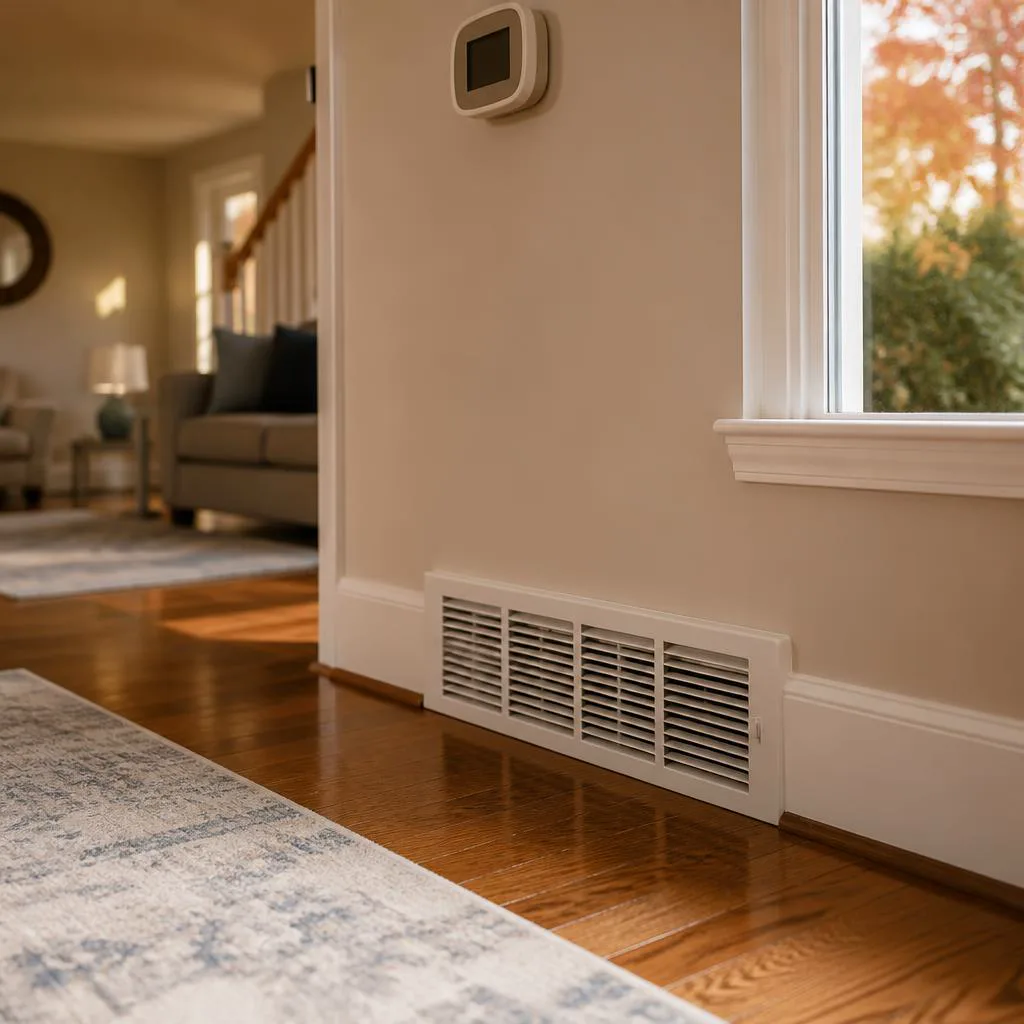
Before a routine first-use check, homeowners can make sure supply registers are not covered by rugs or furniture and check the air filter. Use the filter size and type specified for the system; a filter that does not fit or is more restrictive than the equipment allows can create other problems. A clear filter or open register does not rule out an equipment fault.
Does a burning smell mean the air ducts need cleaning?
Not by itself. A duct-cleaning visit is not a substitute for diagnosing a furnace burner, wiring, heat exchanger, or venting problem. Have a qualified HVAC professional clear a suspected equipment or safety issue first.
After the HVAC system is confirmed safe, a photo inspection can answer a different question: whether accessible ductwork contains visible dust, debris, or other material that warrants cleaning. At Universal Duct Cleaning, the inspection documents accessible supply and return runs before we recommend a scope. A smell alone is not proof of contamination, mold, or pest activity, and we do not promise that cleaning will fix an odor whose source has not been identified.
That distinction matters in homes across Virginia Beach. Great Neck and the First Landing State Park / Shore Drive area have different home layouts from Kempsville or the Oceanfront, but a neighborhood, landmark, or coastal address cannot diagnose a particular furnace or duct run. See our Virginia Beach air duct cleaning service area and Great Neck neighborhood page for local service details.
Who to call in Virginia Beach
For gas, smoke, sparks, an alarm, or a strong electrical or fuel odor, use emergency guidance first — not a duct-cleaning appointment. For a persistent furnace odor, contact a licensed HVAC contractor. If that professional says the equipment is safe and you still want the accessible ductwork checked, request a free photo duct inspection.
For help in Great Neck, see the neighborhood pages for Universal Pest & Termite and Universal Insulation Doctor. Their city-wide pages also cover Virginia Beach pest control and Virginia Beach insulation services.
Universal Duct Cleaning, Universal Pest & Termite, and Universal Insulation Doctor are part of the local Total Home Health family. The yearly plans have different tiers and included services; review the current details at Total Home Health Plans. There are no contracts, and members can cancel anytime.