
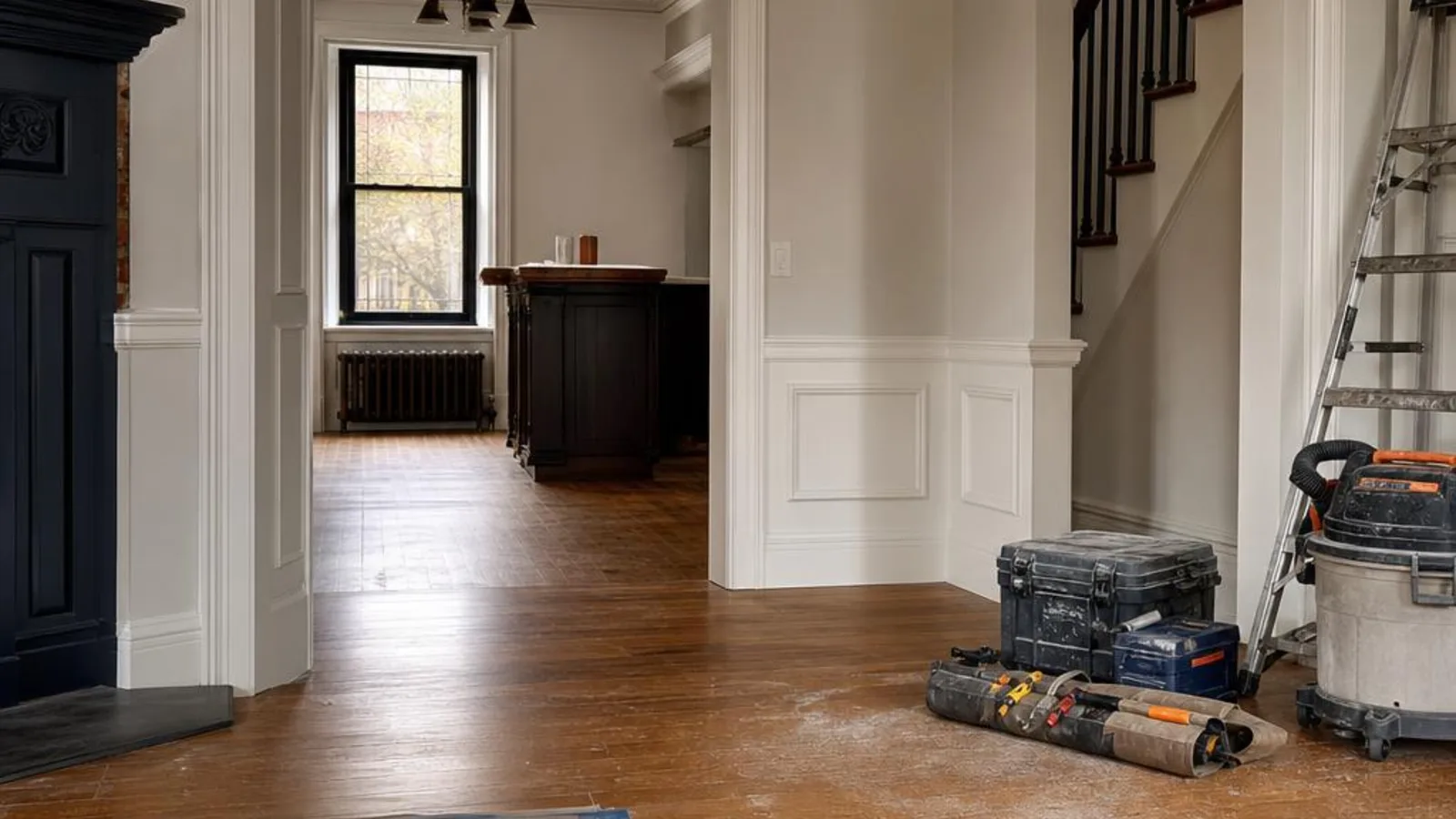
If your Williamsburg home just came through a renovation — a kitchen gut, a bathroom addition, a finished basement — you already know the dust is everywhere. You wiped it off every surface twice, changed your filter, and still found white powder on the coffee table a week later. That fine, alkaline drywall dust travels farther than any household vacuum reaches: it rides your HVAC return air and settles inside duct walls, blower housings, and coil fins where it can accumulate for months before you notice any effect.
Why Drywall Dust Is Different from Ordinary Household Dust
Ordinary household dust — skin cells, fabric fibers, pollen — is relatively coarse and tends to drop out of the air quickly. Drywall compound dust is different. It is ground extremely fine during sanding, which keeps it airborne for hours after a contractor finishes a room. Once it enters your HVAC return, it coats duct walls in a thin white film that hardens slightly as it dries, making it more adhesive than ordinary dust. Over repeated heat cycles, this film bakes onto metal surfaces and provides a surface for subsequent layers of dust, pollen, and pet dander to stick to.
The alkalinity of joint compound (typically pH 8–9) also means that moisture inside the duct — common in Williamsburg's humid summers — can slowly react with metal, accelerating surface oxidation on uncoated galvanized steel. None of this is an emergency, but it is a real reason to address drywall dust deposits promptly rather than waiting for the next scheduled cleaning cycle.
What a Household Vacuum and a Filter Change Cannot Fix
After a renovation, the instinct is to run to the hardware store, buy a high-MERV filter, and vacuum out the visible supply registers. This is a sensible first step — it reduces the amount of fresh dust the system can recirculate — but it does not address what already settled inside the duct runs during the project. Here's why:
- Return-side deposits. The return ducts draw air toward the blower, so they are the first place fine particles collect. Most homeowners cannot reach more than a few inches past the return grille with a shop vac.
- Blower wheel contamination. Drywall particles that make it past the filter (or that entered before you switched to a high-MERV filter) coat blower wheel blades, adding imbalanced weight that reduces airflow and can cause early bearing wear over time.
- Coil surface fouling. The evaporator coil is a dense, finned surface designed to pull heat out of your air — and it is very effective at catching fine particles too. A coil coated in drywall powder has reduced heat-transfer efficiency and can hold moisture that promotes microbial growth.
- Long supply runs. Drywall particles that pass all of these surfaces settle in the horizontal and low-slope sections of supply ductwork where static air lets them accumulate undisturbed.
Changing to a MERV-11 or MERV-13 filter after the project helps stop additional dust from entering, but the filter does nothing retroactively for dust already deposited during the weeks of active construction.
The Right Time for a Post-Renovation Duct Inspection
The ideal window is after finish work is complete and the home has been cleaned — meaning drywall is mudded, taped, sanded, and painted, and the contractor has done their final sweep — but before you settle fully back into the space. This timing lets us assess the actual dust load without the system continuing to collect fresh construction particles during the inspection.
Our free photo duct inspection sends a camera inside your ductwork so you can see the condition of your supply and return runs before any work is quoted. If the deposits are light and the filter change caught most of the dust, we will tell you exactly that. If the camera shows a significant drywall film coating the duct walls, you have visual documentation of what is there and a clear basis for a targeted source-removal cleaning.
What Post-Renovation Source Removal Actually Involves
Post-renovation duct cleaning uses the same rotary agitation and direct-contact HEPA vacuuming as a standard whole-home cleaning, but the focus is on dislodging hardened or packed deposits from the duct walls rather than loose debris. The process typically includes:
- Camera inspection of all accessible supply and return runs before work begins, with photos you keep.
- Rotary brush agitation inside every supply and return duct to break up the baked-on drywall film.
- Direct-contact HEPA vacuuming that captures dislodged material at the source rather than blowing it through the system.
- Return plenum and blower compartment cleaning where dust has accumulated on the blower wheel or AHU housing.
- After-photo documentation of the same sections, so the before-and-after comparison is on record.
We do not promise repairs or equipment upgrades unless the inspection actually reveals a problem that warrants them. The vast majority of post-renovation inspections result in either a cleaning or a "come back later" recommendation — not additional services.
Protecting Your HVAC System Without Over-Promising
A duct cleaning after renovation is a maintenance step, not a guarantee of improved air quality or extended equipment life. What we can say honestly is that removing a layer of abrasive drywall dust from duct surfaces and blower components eliminates a physical contaminant that would otherwise continue circulating through your home every time the system runs. For most Williamsburg families who just invested in a meaningful renovation, that is a logical extension of protecting the project.
Homeowners in Colonial Williamsburg and the surrounding James City County neighborhoods often work on older homes where the ductwork predates the renovation by decades — in those cases, the post-renovation inspection sometimes reveals pre-existing conditions (separated joints, aging flex duct, or prior debris) that were simply never addressed. Knowing that before the new drywall goes up is more useful than discovering it after.
Keep the Whole House Healthy After Your Renovation
A post-renovation duct cleaning fits neatly into our Total Home Health Subscription — one yearly fee that covers duct cleaning, dryer vent cleaning, an annual multi-point duct and crawl space inspection, and more depending on your tier (the full set of benefits comes with the Elite plan). There are no contracts and you can cancel anytime. For the insulation that surrounds your ductwork — especially if the renovation touched the attic or crawl space — our sister company Universal Insulation Doctor in Williamsburg handles insulation assessment and replacement so the work your renovation started carries through the entire building envelope.
Ready to see what the renovation left behind? Call us at (757) 962-0419 or schedule your free photo inspection online. We serve Williamsburg, James City County, and the surrounding Peninsula — and we will show you the inside of your ducts before we quote a single dollar of work.
