
When the heat starts running again, a little dust on a register can make you wonder what is moving through the system. In Hampton Roads homes—from Greenbrier in Chesapeake to nearby communities—winter is a practical time to look at accessible ductwork, connections, and signs of unwanted entry. The photos below are from customer homes shared with us; they show why an inspection should document the actual condition instead of relying on a guess from the living room.
Did you know? Three winter duct facts
- A dusty smell at first heat does not prove dirty ducts. Dust on or near heating equipment can briefly smell when it warms up. If a smell persists, returns every cycle, or seems like gas, smoke, or electrical burning, stop and contact the appropriate emergency or HVAC professional. A duct-cleaning inspection is not a substitute for checking a heating-safety concern.
- Leaky or disconnected ducts can send conditioned air where you do not need it. The U.S. Department of Energy says typical duct systems can lose 20%–30% of the air moving through them through leaks, holes, and poorly connected ducts. That is a general estimate—not a measurement of this pictured home or any particular house. An inspection can identify visible gaps; an HVAC professional can assess system performance and repairs.
- A rodent entry point is not proof that rodents entered the ducts. Look for the actual route and evidence. A gap in the building envelope, activity in insulation, and material inside an air duct are different findings that may need different professionals.
Customer-home photo: debris inside accessible ductwork
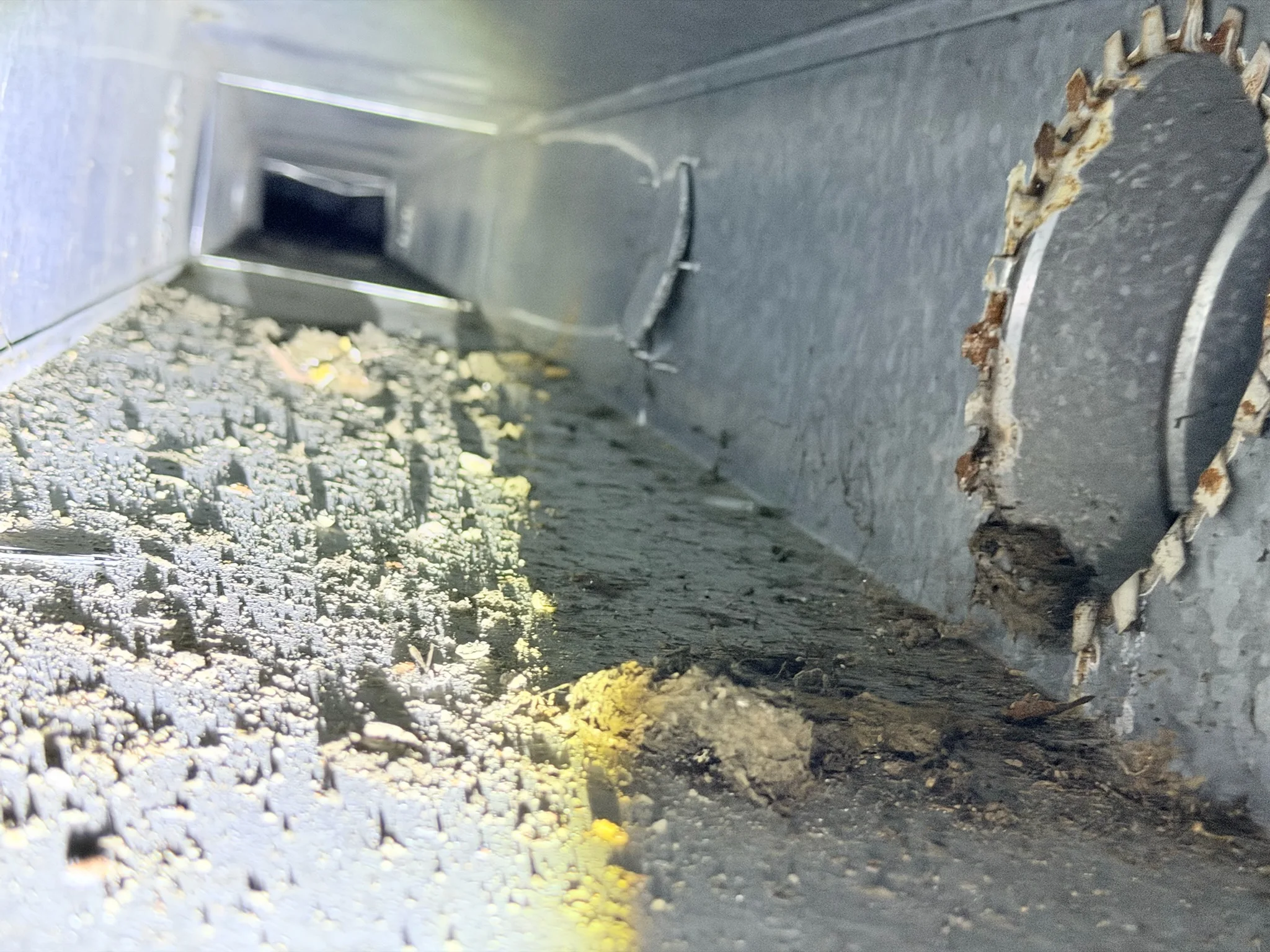
This customer-home photo shows debris visible inside an air duct. A photo inspection helps document what is accessible and whether the condition supports cleaning, repair, or another next step. One image does not establish the condition of every duct run or diagnose a health problem.
Customer-home photo: a separated duct connection
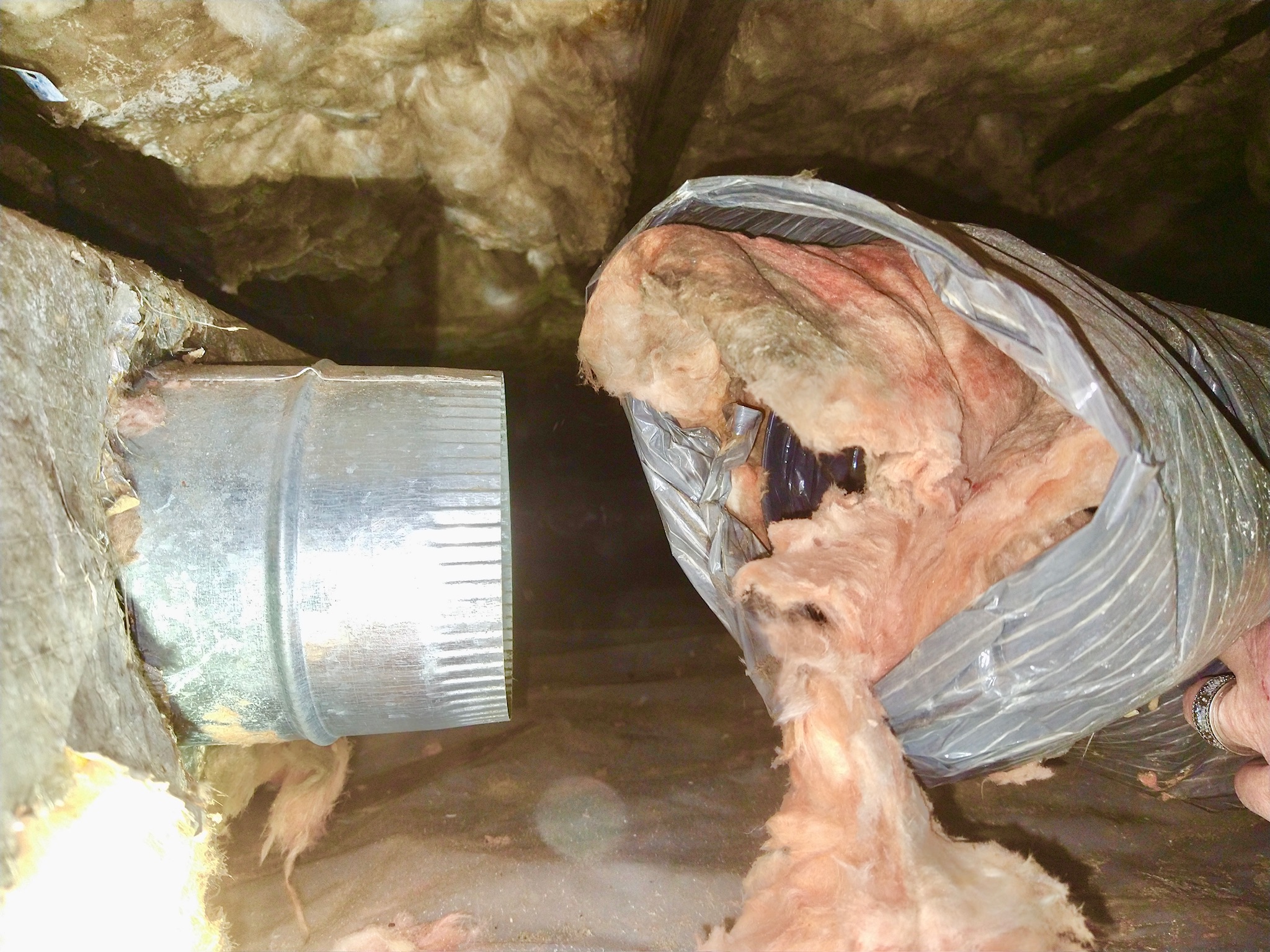
This customer-home photo shows a duct connection separated near a metal collar, with insulation visible around the opening. When a duct disconnects, heated air can escape into an attic or crawl space instead of reaching the room. The amount of energy or comfort impact depends on the system, location, and size of the opening; do not assume a specific loss from a photo alone. Have the connection assessed and repaired using an appropriate method.
What to check when you turn on the heat
- Notice whether dust is only on a register or is repeatedly coming from supply vents.
- Check that registers are open and not blocked by furniture, rugs, or curtains.
- Use the filter size and type specified for your equipment, and replace it as directed.
- Watch for weak airflow, rooms that are consistently difficult to heat, unusual dust, or signs of damage in accessible attic or crawl-space ductwork.
- If you find possible rodent activity, avoid disturbing droppings or nesting material. Ask a pest professional to assess activity and entry points; have duct or insulation conditions evaluated separately when there is evidence in those areas.
A symptom is a reason to investigate, not proof of a particular cause. A free photo duct inspection can document accessible duct conditions before a cleaning recommendation. If the concern is furnace performance, a qualified HVAC professional should assess the equipment.
How to handle possible rodent entry
Rodents can enter through openings around foundations, roof edges, utility penetrations, and other parts of a home. If animals get inside ductwork, droppings, urine, or nesting debris can contaminate the duct interior and become an indoor-air concern. But a gap in the home—or rodent activity in insulation—does not by itself prove that material entered the ducts. The right response starts by identifying the entry point and inspecting the affected area. Universal Pest & Termite serves Greenbrier and Chesapeake and can assess pest activity. If insulation is affected, Universal Insulation Doctor serves Greenbrier. Duct cleaning does not seal a building opening or repair a disconnected run.
Representative Hampton Roads job map
The map below provides neighborhood-level examples to show the areas we serve. Its generated names, job descriptions, and map points are representative—not a live feed or a verified record of recent customer visits. The two customer-home photos above are separate images supplied for this article.
Sources
- U.S. Department of Energy: Ducts — general guidance on duct leakage and energy loss.
- U.S. Environmental Protection Agency: Should You Have the Air Ducts in Your Home Cleaned? — when duct cleaning may be appropriate.